
Effortless Non-Resident Banking in Portugal: Your Complete Guide


Last Updated on 30 December 2024
Portugal, a country known for its warm climate, rich culture, and welcoming populace, also extends its hospitable nature into the realm of banking, particularly for expatriates seeking financial stability and convenience in their new home.
Navigating the complexities of international banking can often be a daunting task; however, the Portuguese banking system is designed to alleviate such concerns, offering a straightforward path to opening and maintaining bank accounts for non-residents.
With the strategic advantage of being part of the Single Euro Payments Area and the user-friendly Multibanco system at their disposal, expatriates can find themselves in an enviable position to manage their finances.
The ensuing discussion will illuminate the intricacies of acquiring a NIF, the pivotal tax identification number, and the various documentation required to unlock the full spectrum of banking services in Portugal.
It is these initial steps, coupled with an understanding of the potential benefits and considerations, that pave the way towards a frictionless financial experience in this Iberian nation.
Key Takeaways
- Opening a Portuguese bank account as a non-resident is easy and comes with low maintenance and transaction costs.
- ActivoBank is recommended for non-residents due to its low fees and English-language options.
- Remote account opening options are available through banks like Bison Bank and Banco Atlantico, as well as service providers like Anchorless and E-Residence.
- Having a Portuguese bank account provides easy access to banking services in Portugal, convenient transactions in the eurozone, and reduced reliance on cash. It is also necessary for retirement plans or investments in Portugal.
Non-Resident Account Perks

Opening a Portuguese bank account as a non-resident offers several advantages. This includes seamless integration into the eurozone’s financial system and access to a user-friendly banking infrastructure.
Non-residents can enjoy significant banking benefits, such as lower maintenance and transaction fees. Additionally, they have the convenience of the Multibanco network for a variety of banking operations.
For those considering retirement in Portugal, a local bank account is indispensable. It allows for the efficient management of retirement plans and local investments. The account simplifies routine financial activities, including bill payments and receiving pensions from abroad. This ensures a smooth transition to life in Portugal.
SEPA and Euro Benefits
Holding a Portuguese bank account offers the distinct advantage of seamless financial transactions across the entire Single Euro Payments Area (SEPA), utilizing the widely accepted euro currency.
This integration ensures that individuals, particularly digital nomads who thrive on mobility, can easily manage their finances without worrying about currency exchange fees or delays typically associated with cross-border banking.
Furthermore, the ability to transact in euros paves the way for expanding investment opportunities across the European market.
| SEPA Feature | Benefit for Digital Nomads | Expanding Opportunities |
|---|---|---|
| Uniform fees | Cost-effective transfers | Broader market access |
| Fast transfers | Real-time management | Quick investment execution |
| Euro currency | No exchange hassle | Stability in transactions |
Embracing SEPA’s framework within Portugal’s banking system enhances both personal and business financial fluidity within Europe.
Understanding Multibanco Access
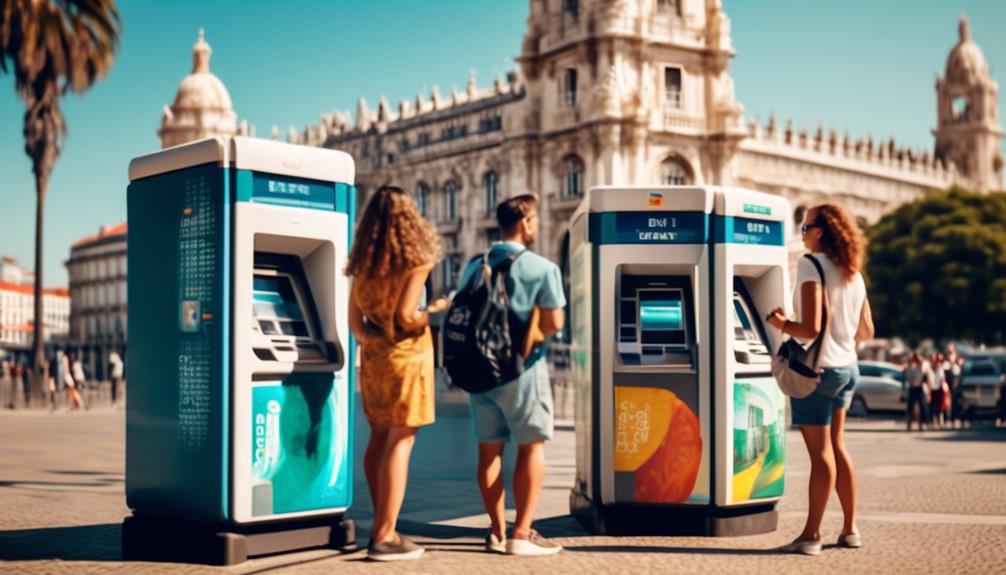
Multibanco access in Portugal empowers expatriates with a comprehensive network of ATMs and debit services, streamlining daily financial transactions. This system is integral to the country’s movement towards a cashless society transformation, making Multibanco usage not only a convenience but a fundamental aspect of modern living in Portugal.
The benefits of Multibanco are vast and include:
- Ease of Use: Simple, user-friendly interfaces.
- Ubiquity: Accessible ATM locations throughout Portugal.
- Versatility: Wide array of transaction types available.
- Security: Robust protection for peace of mind.
- Innovation: Constant updates to meet user needs.
Understanding Multibanco’s capabilities allows expatriates to fully immerse themselves in the financial culture of Portugal, enjoying a seamless banking experience.
Required Documentation
To set the stage for a smooth banking experience in Portugal, expatriates must prepare a set of essential documents required for account opening.
Typically, banks will ask for identification such as a passport, proof of address, a Portuguese tax number (NIF), and evidence of income or employment. An often overlooked aspect is the changing address process; ensure your documents reflect your current residence to avoid delays. For non-residents, a local contact or reference might also be necessary.
Account Opening Process

Upon embarking on the account opening process in Portugal, expatriates will find that gathering the required documentation is the first critical step to accessing the country’s comprehensive banking services.
The Portuguese banking system extends several benefits to its customers, particularly expats who seek financial stability and convenience.
- Ease of Use: The best banks for expats offer user-friendly platforms and customer service in multiple languages.
- Cost Efficiency: Enjoy the benefits of Portuguese banking with competitive fees and favorable interest rates.
- Secure Transactions: Robust security measures protect your finances and personal information.
- Financial Flexibility: Access a range of financial products tailored to expatriate needs.
- Future Planning: Establish a solid financial foundation for long-term goals in your new home.
Choosing the right bank will unlock a world of possibilities and peace of mind.
Initial Deposit Information
Having chosen the right bank and gathered the necessary documentation, the next step for expatriates is to understand the initial deposit requirements for opening a bank account in Portugal. Typically, a cash deposit of around €250 is needed. This amount can vary by bank, so it’s advisable to confirm the exact figure beforehand.
It’s important to note that while some banks may offer the convenience of changing phone number options later, others may not, so ensure your contact information is up-to-date.
When planning to make the initial deposit in person, consider the waiting time at branches. It’s best to visit during off-peak hours to avoid long queues.
Efficiently managing these details will smooth the path to banking bliss in Portugal for expatriates.
Remote Banking Options

For expatriates seeking the convenience of setting up their banking before arriving in Portugal, several institutions offer the option to open a bank account remotely. The ability to establish financial roots swiftly is a distinct advantage in this situation. Expatriates should compare the convenience and costs of remote account opening options carefully.
Some of the benefits of remote banking for expats in Portugal include ease of access, cost savings, and time efficiency. With seamless transition upon arrival, expats can enjoy immediate banking capabilities. Remote account opening also avoids the expense of initial travel for in-person account setup. Additionally, it allows expats to sidestep lengthy branch queues and experience a swift account opening process.
Another advantage of remote banking is the peace of mind it provides. By securing financial arrangements ahead of relocation, expats can have one less thing to worry about during the moving process.
To make informed decisions, it is important for expats to conduct a comparative analysis of different service aspects and fees. This will empower them to choose the best remote banking option that suits their needs.
Service Providers and Costs
Navigating the landscape of service providers for remote bank account opening in Portugal, expatriates will find varying costs that reflect the diversity and convenience of the services offered.
A meticulous comparison of fees for remote account opening services is essential for cost-effective decision-making.
Below is a succinct comparison table:
| Service Provider | Cost (EUR) |
|---|---|
| Bison Bank | 350.00 |
| Banco Atlantico | 300.00 |
| Anchorless | 287.20 |
| E-residence | 359.00 |
| Novo Banco | 250.00* |
*Estimated average cost; may vary based on individual circumstances.
The pros of using such providers include the ease of account setup from abroad and the avoidance of in-person branch visits, while the cons may encompass higher fees and less personalized service compared to traditional banking avenues.
Advantages for Eurozone Transactions

Opening a Portuguese bank account offers expatriates seamless transaction capabilities within the eurozone, thanks to Portugal’s integration into the Single Euro Payments Area (SEPA). The advantages of banking within this harmonious financial ecosystem are numerous, especially when it comes to:
- Simplified international money transfers across eurozone countries
- No currency conversion fees within the eurozone, enhancing savings
- Uniform transaction costs for cross-border payments, providing predictability
- Streamlined direct debits for recurring euro-denominated expenses
- Instant access to funds across SEPA, ensuring liquidity
Expats enjoy currency conversion benefits that eliminate the usual financial friction encountered with diverse monetary systems. The ability to carry out efficient, cost-effective transactions adds a layer of financial ease, making life in Portugal not just charming, but also economically sensible.
Managing Account Details
Upon securing a Portuguese bank account, expatriates must consider the management of their account details to ensure smooth financial operations.
Changing personal information, such as your address or phone number, is a task that may seem mundane but is crucial for accurate and timely banking communication. It is typically a straightforward process that can often be done online or by visiting a local branch.
Frequently Asked Questions
How Does Opening a Portuguese Bank Account Affect My Tax Obligations in My Home Country and in Portugal?
Opening a Portuguese bank account may invoke tax reporting requirements in your home country, depending on existing tax treaties. Always consult a tax professional to understand cross-border taxation and compliance obligations.
Can I Appoint a Legal Representative or Power of Attorney to Manage My Portuguese Bank Account on My Behalf?
Certainly, appointing a Power of Attorney can enhance your account accessibility, allowing a trusted individual to manage your Portuguese bank account efficiently in your stead.
What Are the Implications of Banking Secrecy Laws in Portugal for Non-Residents, and How Does It Compare to My Home Country’s Privacy Standards?
Portugal upholds stringent banking secrecy laws, ensuring robust privacy for non-residents’ financial affairs. International comparisons reveal that these standards often align with, or exceed, those of many expatriates’ home countries, fostering banking transparency.
Are There Any Specific Insurance Schemes or Protection Plans That Cover the Deposits of Non-Resident Account Holders in Portuguese Banks?
Portuguese banks offer a Deposit Guarantee Scheme, ensuring account safety for non-residents up to €100,000, in line with EU directives, providing a robust protection plan for depositors’ funds.
How Does Having a Portuguese Bank Account Impact My Eligibility for Mortgages or Other Financial Products When Investing in Portuguese Real Estate as a Non-Resident?
Having a Portuguese bank account enhances credit scoring, potentially securing favorable interest rates and eligibility for mortgages, essential for non-residents investing in Portuguese real estate. It demonstrates financial commitment and stability within the country.
Conclusion
In the financial odyssey of life, a Portuguese bank account emerges as a sturdy vessel for expatriates, navigating the SEPA-tide waters with grace. This pivotal key unlocks a treasure chest of convenience, fostering trade winds that propel economic sails across the Eurozone’s azure expanse.
As account holders chart their fiscal course, the astute management of this monetary compass ensures a voyage marked by transactional ease and financial harmony within the Iberian realm.