Offshore Company Formation Malta: A Step-by-step Guide


Last Updated on 25 December 2024
Are you looking to capitalize on business opportunities in a diverse and robust economy?
Malta’s welcoming climate for international entrepreneurs can be your launching pad.
This guide provides comprehensive instructions on how to set up a company in Malta, including choosing the right type of company, navigating registration fees, and understanding tax obligations.
Key Takeaways
- Setting up a company in Malta is easy and affordable, with clear laws and low fees.
- There are many benefits to starting a business in Malta, including a favorable tax system, the ability to live and travel within Europe without additional visas, and lower costs compared to other locations.
- The step-by-step guide includes choosing the right type of company, selecting a unique name, preparing necessary documentation, paying the registration fee, obtaining a Certificate of Registration, and registering for VAT.
- Before registering a company in Malta, important considerations include understanding the different types of companies available and ensuring you have all the required documents for registration.
- Foreigners are eligible to register a company in Malta, with no restrictions on foreign ownership. The country also offers residence permits for non-EU startup entrepreneurs through the Malta Startup Residence Programme.
- After completing initial steps such as choosing a unique name and paying the registration fee, final steps include opening a business account with a Maltese bank and obtaining any necessary permits or licenses for your specific industry.
Benefits of Setting Up a Business in Malta

Malta is an attractive option for starting a business due to its clear laws, low fees, and benefits for new companies. Tax incentives can help businesses save money, especially those with non-European ownership, which receive additional perks.
Malta makes it easy for entrepreneurs to get started – you can live there visa-free for 3 years while you grow your company. The country also provides access to nearby markets, enabling travel and partnerships across Europe. After Brexit, UK businesses may find Malta’s stability within the Schengen area reassuring.
Lastly, Malta offers an affordable cost structure compared to other major European cities, maximizing resources when every penny counts for a young enterprise.
The business-friendly regulations and environment position Malta as an ideal hub for launching and establishing a new firm.
Step-by-Step Guide to Setting Up a Company in Malta

To set up a company in Malta, follow these steps: choose the type of company, select a unique company name, prepare the necessary documentation, pay the registration fee, obtain a Certificate of Registration, and register for VAT.
Choosing the type of company
Picking the right kind of company is important for your business in Malta.
Here’s how to do it:
- Look at the types of companies that can be registered in Malta.
- A limited liability company might work best for you. You can choose a private or public one.
- You could also think about starting a general partnership. This means you share control with one or more people.
- A single proprietorship may fit your needs if you want to run everything on your own.
- If you already have a company somewhere else, you could open a branch in Malta as an overseas company.
Selecting a unique company name
Make sure your company name is special.
Check that it’s not already in use by another company in Malta.
Keep the name clean and true to what your business does.
Try to follow any rules for names in your field of work.
Preparing necessary documentation
To set up a company in Malta, you need to prepare some important documents.
These include:
- Memorandum and Articles of Association: These documents outline the company’s purpose, rules, and regulations.
- Form BO1: This form provides details about the company’s shareholders, directors, and secretary.
- Evidence of paid-up share capital: You must provide proof that the required share capital has been paid.
- Identity proofs: All individuals involved in the company, such as shareholders and officers, need to provide their identity proofs.

Paying the registration fee
To register a company in Malta, you will need to pay a registration fee.
The amount of this fee depends on the authorized share capital of your company.
It is important to note that the cost of setting up a business in Malta can vary based on the authorized share capital, with fees ranging from €245 to a maximum of €2,250.
The registration fee is an essential part of the overall cost involved in starting a business in Malta.
So, when planning your budget for company registration, remember to consider this important expense.
Obtaining a Certificate of Registration
To set up a company in Malta, you need to get a Certificate of Registration.
This is an important step that proves your company is legally registered and allowed to do business in Malta.
To obtain the certificate, you have to submit different documents and information to the Registrar of Companies.
These include things like your company’s memorandum and articles of association, details about shareholders and directors, and proof of your registered address.
If any changes happen within your company later on, such as getting new directors or changing your address, you’ll need to inform the registrar using specific forms.
It can be helpful to work with a professional service provider who knows the process well and can make sure everything is done correctly.

Registering for VAT
To operate a business in Malta, it is important to register for value-added tax (VAT).
VAT registration is required for trading entities in Malta engaged in taxable activities.
The Value Added Tax (VAT) rate in Malta is 18%, which is relatively low compared to other European countries. It is worth noting that only Luxembourg and Switzerland have lower VAT rates within the European context.
By registering for VAT, companies can benefit from over 70 double tax avoidance agreements that Malta has signed with other countries.
Registering for VAT also allows companies to claim back any input tax incurred on business expenses.
It’s worth noting that duty exemptions on share transfers and increases in share capital can help reduce operational costs for companies registered in Malta.
Foreigners are welcome to register a company without any restrictions on foreign ownership.
Important Considerations Before Registering a Company in Malta
Before registering a company in Malta, it’s essential to understand the different types of companies and the required documents for registration.
This information will help ensure a smooth and successful process.
Find out more about these important considerations by reading the full article!
Types of companies in Malta
There are several types of companies that can be registered in Malta:
- Limited Liability Company (private or public): This is the most common type of company in Malta. It offers limited liability protection to its shareholders, meaning their personal assets are separate from the company’s liabilities.
- General Partnership: In this type of company, two or more individuals or entities come together to carry out a business with shared profits and responsibilities.
- Single proprietorship: This is a business owned and operated by one person. The individual has unlimited liability for any debts or obligations of the business.
- Overseas Company with a Branch in Malta: If you have an existing company in another country, you can establish a branch in Malta to conduct business locally.
Share of capital required for companies
In Malta, the minimum share capital requirements for various types of companies are as follows:
- Public Limited Liability Company (LLC): For a public LLC, the minimum share capital needed is €46,587.47.
- Private Limited Liability Company (LLC): The minimum share capital requirement for a private LLC is €1,164.69.
- General Partnership: In the case of a general partnership, there is no minimum share capital requirement specified.
- Limited Partnership: Similarly, for a limited partnership, there is no stipulated minimum share capital requirement.
- Sole Proprietorship: A sole proprietorship does not have any minimum share capital requirement.
Required documents for registration
To register your company in Malta, you will need to provide the following documents:
- Memorandum and Articles of Association: These are legal documents that outline the purpose and rules of your company.
- Form BO1: This form contains information about the shareholders, directors, and company secretary.
- Evidence of paid-up share capital: You need to show proof that the required share capital has been paid into the company’s bank account.
- Identification documents: You will need to submit identification documents for all shareholders, directors, and the company secretary.
- Registered office address: You must provide a physical address in Malta where your company will be located.
- Business plan: It is helpful to include a business plan that outlines your goals and strategies for the company.
What restrictions apply to company names?
There are two main restrictions when it comes to company names. Firstly, the name should not contain any offensive words. This is to ensure that the name is not disrespectful or inappropriate.
Secondly, certain words like ‘bank’ or ‘blockchain’ may require proof of authorization to use. This means that if you want to include such words in your company name, you may need to provide evidence that you are allowed to use them.

Foreigner eligibility for registration
Foreigners are eligible to register a company in Malta, and there are no restrictions on foreign ownership.
This means that, as a digital entrepreneur or expat, you have the opportunity to set up your business in Malta without any obstacles.
Additionally, Malta offers a 3-year residence permit for non-EU startup entrepreneurs through the Malta Startup Residence Programme, making it even easier for you to establish your presence in the country.
As a founder or co-founder of a company registered in Malta, you and your dependents will also enjoy visa-free access to Schengen countries for business networking and travel purposes.
Final Steps to Registering a Company in Malta
After completing the initial steps of selecting a company type, choosing a unique name, preparing necessary documentation, and paying the registration fee, there are a few final steps to complete the process of registering a company in Malta.
Opening a business account
To complete the process of registering a company in Malta, one crucial step is opening a business account.
Here are some important points to consider when opening a business account:
- Research different banks: Before deciding where to open a business account in Malta, it is essential to research different banks and their specific requirements. Each bank may have different criteria and services that suit the needs of your company.
- Required documentation: The required documentation for opening a business account may vary depending on the chosen bank. It is important to gather all necessary documents, such as identification documents, proof of address, company registration documents, and tax identification numbers.
- Financial regulations and reporting requirements: Once the business account is opened, it is crucial to ensure compliance with financial regulations and reporting requirements in Malta. This includes keeping accurate financial records, submitting regular financial reports, and adhering to any tax obligations.
- Specialist advice: Navigating the specific circumstances of opening and operating a company in Malta can be complex. Seeking specialist advice from professionals who are knowledgeable about Maltese banking practices and regulations can provide valuable guidance throughout the process.
Obtaining necessary permits and licenses
To start your business in Malta, it is important to get the required permits and licenses.
Here are some key points to keep in mind:
- Different industries require specific permits and licenses. Examples include financial services, gaming, and pharmaceuticals.
- The types of permits and licenses you need will depend on the nature of your business and its activities.
- The Malta Financial Services Authority (MFSA) is responsible for regulating and licensing financial services companies in Malta.
- Gaming companies in Malta are regulated and licensed by the Malta Gaming Authority (MGA).
- Pharmaceutical companies need to be licensed by the Medicines Authority in Malta.
- It’s crucial to consult with the relevant authorities and obtain the necessary permits and licenses before starting your operations.
Registering for tax and financial obligations
To ensure compliance with tax and financial obligations in Malta, here are the important steps to follow:
- Provide accurate information: When registering your company, make sure to provide all necessary details related to taxes and financial obligations. This includes information about your business activities, income, expenses, and any other relevant financial data.
- Obtain a Tax Identification Number (TIN): You will need to apply for a TIN from the Maltese tax authorities. This unique identification number is essential for fulfilling your tax obligations and reporting purposes.
- Register for Value Added Tax (VAT): If your company’s annual turnover exceeds a certain threshold, you will be required to register for VAT. This involves submitting an application to the VAT department and complying with their regulations regarding invoicing, record-keeping, and filing of returns.
- Maintain proper records: It is crucial to keep accurate records of all financial transactions and documents related to your business activities. This includes invoices, receipts, bank statements, payroll records, and any other relevant documentation.
- File tax returns on time: As a registered company in Malta, you will be required to file regular tax returns within specified deadlines. This involves reporting your income, expenses, deductions, and other relevant financial information accurately.
- Pay taxes promptly. Ensure that you pay any taxes due on time to avoid penalties or legal consequences for non-compliance. Stay updated on the applicable tax rates and payment deadlines set by the Maltese tax authorities.
- In Malta, businesses are required to make social contributions on behalf of their employees. These contributions amount to 10% of the employee’s basic weekly wage.
How to lower corporate taxes in Malta?
In Malta, there are various ways to decrease corporate tax obligations. One such method involves obtaining a 100% tax refund if a Maltese company holds a share in a foreign company and earns profits from a participating holding.
Additionally, if there is a double tax treaty between Malta and the company’s home country, it is possible to receive a refund of 2/3 of the tax.
Another option is to receive a refund of 5/7 of the tax if the company generates passive income and royalties. Moreover, if the company’s profits come from commerce, it may be eligible for a refund of 6/7 of the tax owed. These strategies can effectively reduce corporate tax liabilities for businesses operating in Malta.
Malta double tax treaties in place
Malta has entered into a significant number of double tax avoidance agreements, reaching a total of 81 countries. These agreements include prominent countries such as the United States, United Kingdom, and several others.
The purpose of these treaties is to enable investors to circumvent the burden of paying taxes on the same income to both Malta and the respective treaty partner country.
As a result of these agreements, individuals and businesses can benefit from reduced or eliminated double taxation, fostering economic growth and facilitating cross-border investments.
The time and cost of setting up a company
The time and cost of setting up a company in Malta vary depending on the authorized share capital of the company and the depth of services required.
The cost typically ranges from €245 to €2,250, and the process takes approximately two weeks.
This table will provide a more detailed breakdown of the potential time and cost.
| Company Size (Authorized Share Capital) | Registration Fee | Estimated Completion Time |
|---|---|---|
| Up to €1,500 | €245 | Approximately two weeks |
| €1,501 – €5,000 | €350 | Approximately two weeks |
| €5,001 – €10,000 | €600 | Approximately two weeks |
| €10,001 – €50,000 | €750 | Approximately two weeks |
| €50,001 – €100,000 | €1,000 | Approximately two weeks |
| €100,001 and above | €2,250 | Approximately two weeks |
Remember, these are just the costs for company registration.
Additional costs may occur for legal advice, accounting, and obtaining necessary licenses and permits.
Therefore, you should prepare your budget accordingly.
Getting assistance from corporate services
If you need help with the final steps of registering your company in Malta, corporate services can assist you.
They can provide support with tasks like getting a registered address and figuring out details about share capital.

Business hotspots in Malta island
When it comes to popular locations for doing business in Malta, there are several options that are worth considering.
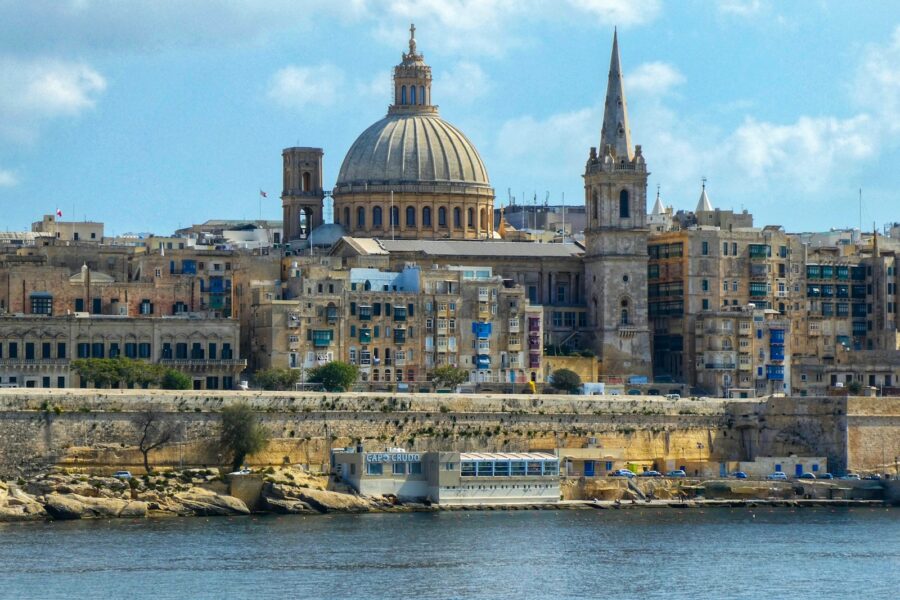
Valletta, the country’s capital, is a prime location with favorable conditions for many businesses. It is home to a range of companies in industries such as finance, education, and maritime services.
If you’re looking for a location that attracts tourists, towns like Sliema and St Julians are popular choices. These areas offer a vibrant atmosphere and are known for their tourism-related businesses. Opening a business connected to the tourism industry, such as a hotel, restaurant, or cafe, could be highly profitable in these areas.
For those interested in the iGaming industry, Gzira is a hot spot. This town houses numerous iGaming companies and provides a thriving environment for such businesses. The proximity to other business amenities and the availability of a skilled workforce make Gzira an attractive option for those in this industry.
Mriehel, as an industrial area of Malta, is ideal for businesses that require production areas or storage facilities. With its industrial infrastructure and accessibility to transport links, Mriehel provides ample opportunities for companies operating in sectors such as manufacturing, logistics, and distribution.
Hot Sectors Beckoning New Enterprises
To obtain business licenses in Malta’s top industries, you’ll want to orient yourself towards one of these thriving sectors:
English Instruction
With English as the official language spoken by 88% of Maltese citizens, education stands tall as a smart market here.
Tap into the bustling demand for English language instruction from the thousands of international students and professionals staying in Malta. Consider establishing your own school or tutoring service to profit from this need.
Maritime Magic
Strategically positioned in the Mediterranean Sea with one of the region’s largest seaports, Malta makes the most of its geography through maritime trade and tourism. Set sail with your ambitions by incorporating shipping, boating repair, private yacht charters, or other ocean-based endeavors.
Finance Forward
As an EU member abiding by rigorous financial standards, Malta welcomes investors to build companies specializing in monetary services, accounting, investments, banking, insurance, and beyond. Take your finances to the next level backed by a thriving and regulated economic infrastructure.
Tourism Central
With idyllic cities like Valletta, St Julian’s, and Sliema attracting almost 1 million visitors yearly, tourism and auxiliary industries thrive here. Cater to sightseers via restaurants, bars, hotels, travel agencies, shopping outlets, experiences, and more in this vacation hotspot.
Gaming Nirvana
Since pioneering gaming regulations in 2004, Malta has become a safe haven for online casinos, bookies, lotteries, and sports betting ventures. Try your luck in this specialized landscape with an enthusiastic customer base.
Conclusion
Setting up a business in Malta is a straightforward process.
By following the step-by-step guide mentioned above, you can register your company and start doing business in this attractive jurisdiction.
From choosing the right type of company to obtaining the necessary permits and licenses, each step has been outlined for your convenience.
Take advantage of Malta’s benefits for entrepreneurs and expats and embark on your journey to success.
Frequently Asked Questions
What is company formation in Malta?
Company formation in Malta means setting up a new business or opening a company there.
How can I set up a business in Malta?
You need to follow many steps to set up a business in Malta, like choosing your company name and type, knowing the internal rules of the operation, understanding the tax rate, and making sure you have enough money to start.
Are there different types of companies I can open in Malta?
Yes! You could open private companies, public companies, limited liability companies, and even single-member firms, depending on what you wish.
Where do we register our company name when starting our Maltese company?
Your chosen firm’s title must be signed off by the Registry of Companies within the Malta Business Registry prior to use.
Who needs to be involved during the incorporation of my firm?
At least one owner (also called judicial representatives) along with a company secretary have key roles during this phase for any Maltese organization.
What are some benefits of starting an enterprise on this Mediterranean island?
Malta offers major perks such as low costs for forming businesses and taxing systems that see most profits derived from overseas operations not taxed locally, making it very attractive globally for entrepreneurs looking to expand their activities across borders without hefty financial burdens.
What is a PE number and how to obtain it?
A PE number, also known as a Permission to Employee number, is a necessary requirement for employers in Malta when hiring individuals. It is a unique identifier that ensures compliance with employment regulations and procedures. To obtain a PE number, the process can be conveniently completed online and may take as little as one day.
Should I seek specialist advice when opening a business account in Malta?
Yes, seeking specialist advice from professionals who are knowledgeable about Maltese banking practices and regulations can provide valuable guidance throughout the process of opening and operating a business account in Malta. They can assist in understanding the specific requirements, legal obligations, and potential complexities involved.
Are there any specific requirements or permits needed to operate gaming services in Malta?
Yes, before starting operations, it is crucial to consult with the relevant authorities, such as the Malta Gaming Authority, and obtain the necessary permits and licenses. Specific requirements and permits will need to be obtained to comply with the regulations in place.
Are there any authorities responsible for regulating gaming services in Malta?
Yes, gaming services in Malta are regulated and licensed by the Malta Gaming Authority (MGA). They are the relevant authority responsible for overseeing and regulating the gaming industry in Malta.