Understanding The Key Differences: Sole Proprietorship Vs LLC

Last Updated on 5 January 2025
Deciding on a business structure is a key step in laying the foundation for your entrepreneurial journey.
Both sole proprietorships and Limited Liability Companies (LLCs) offer unique pros and cons that accommodate the different needs of businesses.
This article provides critical insights into these two popular business structures, helping you unravel their distinctions.
Grab a seat, as we’re about to illuminate your path towards making an informed decision for your budding business venture.
Key Takeaways
- A single owner manages sole proprietorships, whereas LLCs provide more flexibility with multiple members and managers.
- Sole proprietorships do not separate business and personal finances, while LLCs operate as independent entities with clear financial separation.
- Personal liability protection is limited in sole proprietorships, as owners’ personal assets can be at risk. LLCs provide stronger liability protection by separating personal and business finances.
- Both sole proprietorships and LLCs have the option to register a business name for legal operation and brand identity.
Key Differences Between Sole Proprietorship and LLC
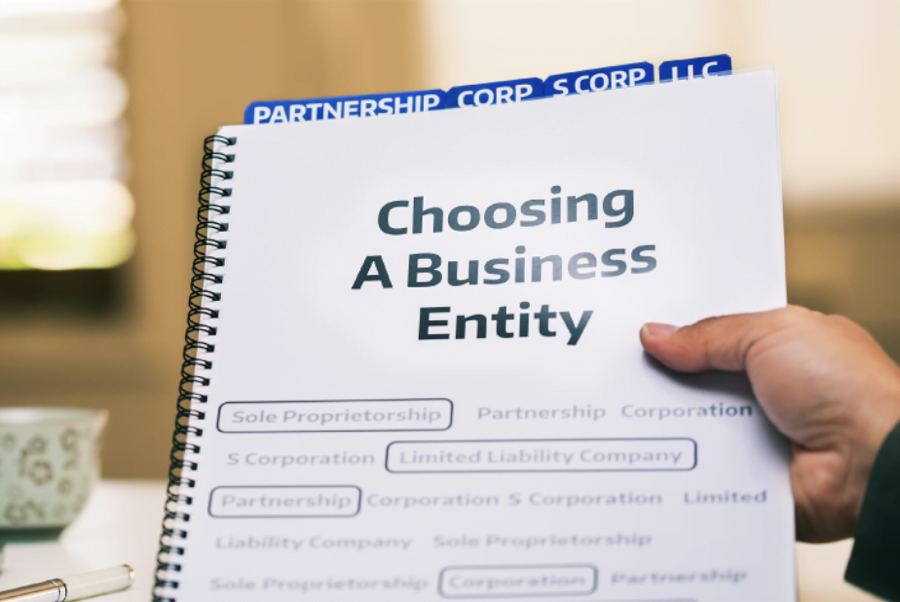
Sole proprietorships and LLCs differ in terms of their management structures, personal liability protection, separation of business and personal finances, business name registration, and tax implications.
Management structure
The structure of management differs greatly between a Sole Proprietorship and an LLC.
In a Sole Proprietorship, the owner makes all key decisions and manages daily operations alone.
There are no other managers or members involved in decision-making processes.
This setup offers simplicity but may lack business flexibility when compared to an LLC.
In contrast, an LLC provides more options for operational control. Multiple owners who share duties and decision-making authority can own the company, which opens up more opportunities for growth and strategic planning.
Members can also appoint managers to handle day-to-day operations, freeing them to focus on big-picture considerations.
Interestingly enough, single-member businesses aren’t left out of the benefits offered by LLCs either; one person can form a Single-Member Limited Liability Company (SMLLC).
These SMLLCs maintain the advantage of personal liability protection while giving owners latitude in managing their company’s affairs as they see fit.
So while both structures have their own merits depending on your specific needs, you’ll find that the corporate style structure of an LLC lends itself well to scaling up and taking your business pursuits further with added versatility at its core.
Personal liability protection
In the world of sole proprietorships, personal liability protection is a significant concern.
With this type of business structure, there’s no separation between your personal and business finances.
This means if your company accumulates debts or faces a lawsuit, your personal assets, such as cars, homes, or savings accounts, may be at risk of liquidation.
On the other hand, Limited Liability Companies (LLCs) offer more secure barriers to protect member liability.
LLCs create a legal distinction between you and your business.
Therefore, financial hardships faced by the business do not directly affect an LLC owner’s personal finances or assets.
Your home stays yours; creditors can’t touch it, even in cases of severe business bankruptcy.
Rest easy knowing that with an LLC, only the amount invested directly into the company is susceptible to risks associated with debt protection or fulfilling any other obligations held by the enterprise.

Separation of business and personal finances
Unlike an LLC, which operates as a separate entity from its owner, a sole proprietorship does not distinguish between business and personal assets or expenses.
Consequently, you could find yourself personally liable for any debts incurred by your business.
On the other hand, forming an LLC offers significant advantages in terms of financial separation.
As an independent legal entity, an LLC allows you to keep your personal assets safe should your business face bankruptcy or any legal issues.
The distinction also extends to how these two structures handle their taxes.
Tax obligations for profits earned by an LLC can either fall on the company itself or pass onto members depending on elected tax classification while all earnings from Sole Proprietorship gets taxed as personal income of the owner.
This fundamental difference underlines why keeping accurate records matters.
Not only will it help during tax season, but properly separating finances can provide protection against potential future liabilities.
Business name registration
To operate legally and establish your brand identity, both sole proprietorships and LLCs have the option to register a business name.
This process involves choosing a unique name that accurately represents your business and filing the necessary paperwork with the appropriate government agency at the state level.
By registering a DBA (doing business as) name, you can create a distinct identity for your venture and protect it from being used by others.
Whether you choose to go for a catchy or professional-sounding name, having a registered business name adds credibility and helps customers easily identify your services or products.
Tax implications
LLCs and sole proprietorships have different tax implications.
- In a sole proprietorship, the owner pays personal income tax on the profits earned by the business. This means that all business income is reported on their personal tax return.
- On the other hand, LLC owners have more flexibility when it comes to tax structuring. They can choose corporate tax status for their LLC, which may provide certain advantages in terms of taxation.
It’s important to note that single-member LLCs also have some key differences in terms of tax treatment compared to sole proprietorships.
Certain elections made by LLC owners can affect how their business income is taxed.
Formation and Registration Process
To create a sole proprietorship, you need to follow these steps: register your business name, obtain any necessary permits or licenses, and apply for an Employer Identification Number (EIN) if required.
For forming an LLC, the process involves selecting a unique business name, filing articles of organization with the state, creating an operating agreement, and obtaining any necessary licenses or permits.
Steps to create a sole proprietorship
To create a sole proprietorship, follow these steps:
- Choose a business name that reflects your brand and is not already in use.
- Register your business name with the appropriate state agency, if necessary.
- Obtain any required business licenses or permits for your industry or location.
- Obtain an Employer Identification Number (EIN) from the IRS, if needed.
- Open a separate business bank account to keep your personal and business finances separate.
- Keep detailed records of your income and expenses for tax purposes.
Steps to form an LLC
To form an LLC, follow these steps:
- Research the requirements: Understand the specific rules and regulations for forming an LLC in your state.
- Choose a name: Select a unique name that complies with your state’s naming guidelines.
- Prepare and file articles of organization: Draft and submit the necessary paperwork, known as articles of organization, to your state’s secretary of state office.
- Include the required information: Provide details such as the LLC’s name, business address, registered agent information, and purpose of the business.
- Pay filing fees: There is usually a fee associated with filing the articles of organization. Make sure to check the current fee amount for your state.
- Create an operating agreement: Though it’s not always necessary, doing so aids in outlining the LLC’s roles, responsibilities, and decision-making processes.
- Obtain necessary licenses and permits: Depending on your industry or location, you may need additional licenses or permits to legally operate your LLC.
- Register with tax agencies: Apply for an Employer Identification Number (EIN) from the Internal Revenue Service (IRS). This number is used for tax purposes and allows you to hire employees if needed.
- Comply with ongoing requirements: Once your LLC is formed, make sure to fulfill any ongoing reporting or compliance obligations required by your state.

Operations and Management
In a sole proprietorship, the owner is solely responsible for all aspects of the business’s operations and decision-making.
In an LLC, members and managers have specific roles and responsibilities in managing the company.
Responsibilities and decision-making in a sole proprietorship
In a sole proprietorship, you have complete control and responsibility for all aspects of your business.
You are the one calling the shots and making key decisions. This includes:
- Managing day-to-day operations
- Developing marketing strategies
- Handling finances and budgets
- Setting policies and procedures
- Determining pricing and product offerings
Roles and responsibilities of members and managers in an LLC
Members and managers of an LLC have distinct roles and responsibilities.
Here are some key details to understand:
- LLC members have the authority to make decisions on behalf of the business.
- Members also contribute capital, share profits, and have voting rights.
- In a manager-managed LLC, appointed managers are responsible for day-to-day operations.
- These managers oversee the business’s activities, make strategic decisions, and ensure compliance with legal requirements.
- Passive investors who are members but not managers do not have direct involvement in running the business.
Legal Protection and Paperwork
Both structures have specific paperwork and compliance requirements that must be followed to maintain legal status.
Personal liability in a sole proprietorship
In a sole proprietorship, personal liability is a crucial factor to consider.
This unlimited personal liability exposes your personal assets to risk if the business cannot meet its financial obligations.
Limited liability and legal protection in an LLC
An LLC offers limited liability protection to its members, meaning that they are not personally responsible for the business’s debts and liabilities.
This protection can be especially valuable in legal situations, as it helps shield the owners from personal financial risk.
By forming an LLC, entrepreneurs gain an additional layer of legal protection by ensuring that their personal assets are not at risk for the company’s obligations.
Both single-member LLCs and sole proprietorships are treated as pass-through entities for tax purposes.
In terms of paperwork and compliance requirements, both business structures have certain obligations to fulfill.
However, an LLC typically has more formalities to follow when it comes to record-keeping and filing annual reports with the state.

Paperwork and compliance requirements for both business structures
Starting a business involves navigating various paperwork and compliance requirements.
As an entrepreneur, you need to understand that these obligations differ significantly depending on whether you establish a sole proprietorship or an LLC.
| Business Structure | Paperwork | Compliance Requirements |
|---|---|---|
| Sole Proprietorship |
|
|
| LLC |
|
|
In summary, the paperwork and compliance requirements for a sole proprietorship are significantly less than those for an LLC.
Sole proprietorships have a simpler setup process and fewer ongoing obligations, making them ideal for single-owner businesses with low liability risk. In contrast, LLCs provide limited liability protection and more flexibility, but at the cost of more paperwork and ongoing compliance obligations.
Conclusion
In conclusion, understanding the key differences between a sole proprietorship and an LLC is crucial when making decisions about business ownership.
The choice between these two structures depends on factors such as liability protection, tax flexibility, and decision-making autonomy.
By considering these aspects, entrepreneurs can make informed choices that align with their specific needs and goals for their business.
Frequently Asked Questions
What is the main difference between a sole proprietorship and an LLC?
The main difference between a sole proprietorship and an LLC is the level of liability protection. In a sole proprietorship, the owner is personally responsible for all business debts, while in an LLC, the owner’s personal assets are generally protected.
Do I need to file any paperwork to establish a sole proprietorship or an LLC?
No, you do not need to file any specific paperwork to establish a sole proprietorship. However, forming an LLC requires filing articles of organization with the state and paying associated fees.
Can I have multiple owners in both a sole proprietorship and an LLC?
No, you cannot have multiple owners in a sole proprietorship as it is owned by one individual only. An LLC allows for multiple owners known as members who share ownership rights and responsibilities.
Are there any tax advantages to choosing either a sole proprietorship or an LLC?
Both types of businesses offer certain tax advantages. A sole proprietor can benefit from simplified accounting methods, while an LLC has flexibility in how it is taxed – it can be treated as either a partnership or corporation for taxation purposes.
Is personal liability limited for both types of businesses?
In general, personal liability is limited in both cases; however, there may be exceptions such as when fraud or illegal actions occur where personal liability can still apply even within an LLC structure