How to Move to Thailand: Essential Tips for a Smooth Relocation


Last Updated on 4 January 2025
Moving to Thailand can seem daunting, yet it’s a dream for many looking to start a new chapter of their lives.
With its rich cultural heritage and affordable living costs, Thailand offers an extraordinary lifestyle that’s hard to resist.
This blog post will guide you through the necessary steps and provide essential tips for a smooth transition.
Key Takeaways
- Thailand has good food, lovely places to live, and a low cost of living.
- There are many visa options for living in Thailand. These include work visas, digital nomad visas, and even permanent resident visas.
- You can open a bank account in Thailand easily. It helps if you pick a bank with staff who speak English and offer online services.
- Health insurance is key in Thailand. Both public and private healthcare plans are available.
Overview of Thailand
Thailand, often referred to as the “Land of Smiles,” is a Southeast Asian country known for its tropical beaches, opulent palaces, and ancient temples.
It offers a mix of traditional and modern lifestyles, with bustling cities like Bangkok and serene rural areas.
The cost of living in Thailand is affordable, making it an attractive destination for many expats.
One can live comfortably on $1,800 to $2,300 per month here.
Thai cuisine is globally acclaimed for its flavorsome street food, which is both delicious and inexpensive.
The healthcare system in Thailand has robust medical tourism facilities, which makes it handy for expat retirees.
In terms of quality of life, from tranquil historical city Chiang Mai in the north to beach paradise Phuket or royal resort town Hua Hin, there’s something for everyone.

A brief description of Thailand
Thailand is a lush, tropical paradise. Many people call it the “Land of Smiles.”
It has cities full of life and quiet islands, too.
You can see farms, big mountains, and lovely parks all over the country.
Its past is rich and important to its people.
Both old and new live in peace here.
Thai food tastes good and does not cost much.
That’s why both locals and expats love it so much!
In the next part, we will look at life in Thailand even more closely.
Quality of life in Thailand
Life in Thailand is good.
It mixes old and new things well.
There are busy cities and quiet towns.
Many enjoy Thai food from street stalls.
Food prices are low too.
You can live on less money in smaller towns than in big cities like Bangkok or Chiang Mai.
In these two spots, you will find tall buildings, malls, and markets full of life!
For people who need to see a doctor or dentist, Thailand has great care for a good price.
This is why many who don’t work anymore come to live here.
Next point: think about costs before moving to Thailand!
Considerations Before Moving to Thailand
Before making the decision to move to Thailand, you need to carefully consider a few critical factors.
These include understanding the country’s cost of living and evaluating how it aligns with your financial situation.
You should also research safety aspects in different regions for a worry-free stay.
Additionally, gaining insights into their healthcare and education systems will help you ensure a comfortable life if you are moving with family or planning on building one there.

Cost of living
Moving to Thailand is an exciting venture, and one of the considerable advantages is the relatively low cost of living.
The country offers a range of living standards to suit different budgets, from simple and modest to opulent and luxurious.
The cost depends on the lifestyle you choose and the location, with major cities like Bangkok being more expensive than smaller towns and rural areas.
Here is a rough estimate of how much you can expect to spend on different necessities per month.
| Expense Category | Average Cost |
|---|---|
| Rent for a One-Bedroom Apartment in City Center | $600 – $1000 |
| Rent for a One-Bedroom Apartment Outside City Center | $300 – $500 |
| Utilities (Electricity, Heating, Cooling, Water, Garbage) | $60 – $100 |
| Internet | $15 – $30 |
| Groceries | $150 – $200 |
| Restaurant Meal | $1 – $3 for street food, $15 – $20 for a restaurant |
| Transportation (Monthly Pass) | $30 – $50 |
| Health Insurance | $40 – $100 |
Keep in mind that these are just estimates, and real expenses can vary based on individual lifestyle choices.
However, even at the higher end, couples can comfortably live on $1,800 to $2,300 per month, which is significantly lower than in many Western countries.
Additionally, the cost of living drops considerably in smaller towns and rural areas.
For instance, in Chiang Mai, the cost of living is generally lower than in Bangkok.
Moreover, Thai food is not only delicious but also highly affordable, with street food widely available throughout the country.
Having a thorough understanding of the cost of living will allow you to prepare financially and make the most of your new life in Thailand.
In the next section, we will discuss safety considerations you should keep in mind when planning your move.
Safety considerations
Staying safe in Thailand is important.
Protests can happen because of the shaky political state.
In fact, Thailand ranks 72nd globally for democratic rights and stability.
The country treats COVID-19 like the flu and keeps a close watch on it.
Because of this, they have rules such as a 14-day quarantine period for all who enter Thailand.
Safety matters most when you plan to move to another country!
Now let’s look at how healthcare works in Thailand..
Healthcare system
Thailand offers a strong healthcare system. It covers everyone and is run by the government.
This program, the Universal Coverage Scheme (UCS), costs $80 per person every year.
If you work in Thailand, you also get this health plan.
But it is good to have private health insurance too.
The care here is great value for money. That’s why many people come to Thailand for medical and dental help.
Now let us talk about education in Thailand.
Education system
Thailand has good schools.
They teach kids great lessons to kids.
Some are Thai, and some are international schools.
The Thai ones teach in the Thai language, but many also teach English and other languages too.
The cost of these schools can vary. International schools tend to be more costly than Thai ones.
But they might use English more often in their classes, which could be good for your kids if they speak English.
Next, let’s talk about the visa you will need when you move to Thailand.
Visa Requirements for Moving to Thailand

Understanding Thailand’s visa requirements is a key step in your relocation process.
Whether you’re eyeing a work visa, considering the digital nomad route, or exploring permanent residency options, this section will provide you with the essential knowledge to navigate the Thai immigration system seamlessly.
Navigate further into our guide for an in-depth look at these requirements and more practical tips on making your move to Thailand as smooth as possible!
Work visa
You need a work visa to have a job in Thailand.
A business visa is one type you might get.
This visa can last for 90 days.
To apply, go to a Thai embassy or consulate office.
You will then be legally allowed to work in Thailand!
Digital nomad visas
Thailand opens its doors to people who work from any place.
They can live and work in Thailand for up to a year on a digital nomad visa.
To get this visa, you must show proof of your job or freelance work.
You also need to show that you earn enough money and have health insurance.
This new type of visa is perfect for those who love the idea of working while they travel.
It allows them to soak up Thai culture while earning a living too!
This helps grow Thailand’s economy by bringing in bright minds and skilled workers.
Permanent residency options
You can stay in Thailand for good with a permanent resident visa.
You first need to live on a non-resident visa for three years straight.
Then you can apply to be a permanent resident.
Being a permanent resident means you don’t have to get your visa renewed all the time.
This is great if you plan to stay in Thailand for many years, or even forever.
Financial Matters

Before moving to Thailand, ensure you have a comprehension of the country’s financial landscape.
From setting up a local bank account to understanding the average salary and income tax system in Thailand, each aspect plays an important role in your transition process.
Manage your expectations realistically according to the cost of living there.
Setting up a bank account in Thailand
In Thailand, setting up a bank account is an easy task if you follow these steps:
- Show needed papers: A passport, work permit, and proof of address are all needed.
- Choose a bank with English-speaking staff and online services: This will make managing your money easier.
- Prepare to give a minimum deposit: Thai banks often ask for this when you start an account.
- Look at different banks and what they offer: It helps to know which bank provides the best services.
- Know that some Thai banks have accounts for foreigners. These accounts may have their own rules about how much money you can move and where you can send it.
- Use online banking services. They let you pay bills and check your money without going to the bank.
Average salary in Thailand
In Thailand, how much you earn can vary.
It depends on your job and skills. But, on average, a person makes about 50,000 Baht per month in Bangkok.
This is the big city where most jobs are.
In other parts of Thailand, people make around 30,000 Baht each month.
These are just averages, though.
Some jobs pay less or more than this amount.
Income tax in Thailand
You need to know about income tax in Thailand if you plan to work there.
The country uses a system based on how much money you make.
If you earn little, you may not have to pay any tax.
But if you make a large amount of money, the tax could be up to 35% of it each year.
This way, everyone pays what is fair for them.
Health and Insurance
In Thailand, healthcare facilities are top-notch; to access them, it’s essential that you secure a good health insurance plan.
Whether private or public healthcare services, know that quality isn’t compromised in Thai hospitals.
Ensure you do your research and select the best health insurance provider before moving.
Healthcare in Thailand
Thailand has good healthcare.
You pay $80 a year if you live there.
This is part of their Universal Coverage Scheme (UCS).
But be ready to wait in line at public hospitals.
Many people use private health plans to skip the long waits.
People from other countries living in Thailand like this option, too.
Did you know that Thailand is a top spot for getting medical and dental work done?
It’s not just about the low costs, though; the care they get is really good too!
Getting health insurance in Thailand
Getting health insurance in Thailand is key. Here are some important steps:
- Check your current coverage: Find out if your home country’s insurance covers you in Thailand.
- Look for private insurance. If not, search for private healthcare plans in Thailand.
- Understand the coverage: Make sure it covers hospital stays, doctor visits, and medicine.
- Consider medical tourism: Thailand’s medical industry offers good prices for treatments and surgeries.
- Use expat resources: Ask other expats for advice on choosing the best plan.
- Apply for insurance: Fill out all forms and pay the required fees to ensure you’re covered.
- Keep proof of insurance handy. Always carry proof of your health insurance with you.
- Stay updated on payments: Pay premiums on time to avoid losing coverage.
Living Arrangements
Determining where to live in Thailand is crucial, as the location can drastically affect your lifestyle and cost of living.
Take into consideration your preferred climate, proximity to amenities, and whether you prefer a bustling city like Bangkok or a laid-back beach town such as Hua Hin.
Explore various methods for finding accommodation, ranging from online real estate platforms to local agents.
Keep in mind both short-term and long-term rental options.
Understand the renting process in Thailand, such as lease agreements and deposits.
Ensure that the place you choose fits within your budget while meeting all your needs for a comfortable life as an expat in Thailand.
The best places to live for different lifestyles (retirees, families, singles)
Thailand is a diverse country that offers a variety of living options for different lifestyles.
Whether you’re a retiree seeking tranquility, a family looking for an enriching environment for your kids, or a single individual seeking a vibrant social scene, there’s a place for you in Thailand.
| Lifestyle | Best Places to Live | Highlights |
|---|---|---|
| Retirees | Chiang Mai, Hua Hin | Chiang Mai, located in the north, is a peaceful and historic city with a lower cost of living compared to Bangkok. It’s a popular choice for retirees, small business owners, and teachers. Hua Hin is a more affordable alternative to Phuket and offers a range of amenities, including international-standard hospitals and water sports, making it an ideal choice for retirees. |
| Families | Bangkok, Hua Hin | Bangkok, the capital city, offers a mix of modern and traditional elements and is a dynamic city to raise a family in. Hua Hin is also an excellent choice for families, boasting a range of amenities and activities for both kids and adults. |
| Singles | Bangkok, Phuket | For singles seeking a vibrant social scene and numerous job opportunities, Bangkok is the place to be. Phuket, the largest island in Thailand, offers a beach lifestyle with various amenities such as beaches, marinas, and golf courses, making it an attractive choice for singles. |
How to find accommodation
Finding a place to live in Thailand is a key step.
Here are some tips:
- Start by looking online. Many websites list rentals in Thailand.
- If you’re moving for the first time, rent before buying. Buying can be hard for foreigners.
- Use your network. Ask other expats where they live.
- Learn about popular places like Chiang Mai, Koh Samui, or Bangkok.
- Expect to pay more if you want to live near the coast and have a sea view.
- In Bangkok, check areas like Ekkamai, Sathorn, or Thong Lo.
- Have a rental contract ready before applying for a Thai work permit.
- Inspect any potential home carefully before signing a lease agreement.
- Be ready to pay the first month’s rent plus a security deposit.
Working in Thailand
Seeking employment in Thailand requires understanding the local job market.
Major cities like Bangkok and Chiang Mai offer diverse opportunities, especially in industries such as tourism and information technology.
Before you start your job hunt, be aware that you’ll need a work permit along with a non-immigrant visa to legally work in Thailand.
Research potential employers thoroughly. Many expats have found success working for international companies headquartered in Thailand’s thriving capital city or teaching English as a foreign language.
Job-hunting tips
Job hunting in Thailand may feel like a big task.
But with these tips, you can find success:
- Know the job market: Understand who is hiring and what jobs are “in demand” in Thailand.
- Grow your network. Connect with other expats and locals who can help you find work.
- Build your skills. If you have medical or dental skills, there may be many job chances for you in Thailand’s booming health tourism field.
- Look in Bangkok: This big city has many job openings for expats.
- Try Chiang Mai: It’s a peaceful place with cheap living costs—a great spot for job seekers.
- Check out Phuket too. If you want to live by the beach, this could be the place for you!
- Use online resources: Websites like LinkedIn and local job boards are helpful tools to use in your search.
- Learn some Thai: Even though English might be used at work, knowing some Thai can impress employers.
- Be patient, but persistent. Job hunts take time! Keep trying, even if things don’t go as planned at first.
- Showcase cultural understanding: Show how well you adapt to different cultures; it will help you get an edge over others!
Work opportunities in major cities
Bangkok, the capital of Thailand, is full of job chances.
With over 14 million people, there are many businesses.
You can work in fields like tech or finance here.
Chiang Mai is another city with good jobs.
The cost of living here is lower than in Bangkok, too.
Phuket and Hua Hin offer a nice beach life with different kinds of work opportunities as well.
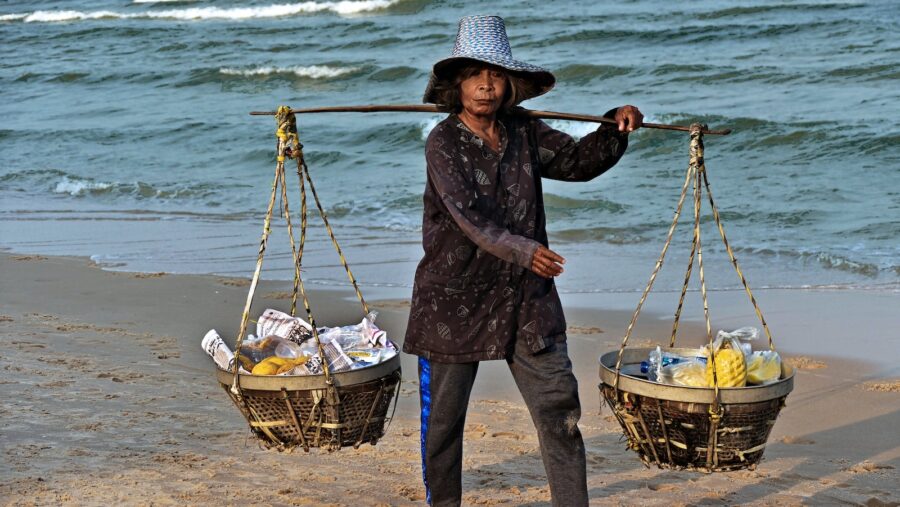
Adapting to Thai Culture and Customs
Living in Thailand is a rich experience.
You must learn and value Thai customs to enjoy your stay.
It’s common to greet with a “wai”.
A wai is when you press your palms together and bow slightly.
This shows respect for others.
The people of Thailand love their king deeply.
They play the king’s anthem before movies in theatres.
Everyone stands up as a sign of respect.
Temples are sacred places in Thailand.
Always show kindness at temples.
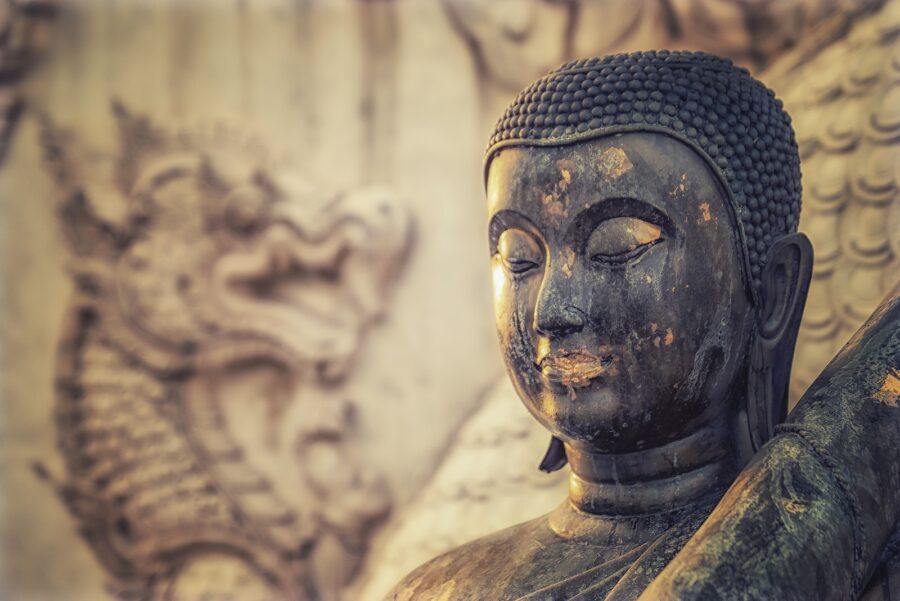
Dress modestly, take off shoes, and avoid pointing feet at Buddha statues.
Thailand also loves festivals!
Loi Krathong and Songkran are among the favorites here.
Lastly, smile often!
Thailand is rightly called the Land of Smiles because its people find joy in life’s simple things.

Essential Preparations for Moving to Thailand
Before making your move to Thailand, there are key preparations you need to consider.
From understanding the best shipping options for your belongings to acclimating yourself to the climate and weather predictions to knowing what necessary documents you will need, it all plays a significant role in facilitating a smooth transition into Thai living.
Let’s help ease that process by diving deep into these essentials!
Get ready to pack your bags and kickstart this exciting journey of discovery and adventure.
Moving and shipping considerations
Moving to Thailand needs good planning.
You must think about how you will move and ship your things.
- Begin by sorting out your stuff.
- Decide what you want to bring.
- Sell or give away the things you don’t need.
- Think about the size of your new home in Thailand.
- Decide if all your things will fit into the new house.
- Get quotes from shipping companies beforehand.
- Choose a company that ships worldwide and has done business with Thailand before.
- Be ready for the cost, which may be high.
- You can ship some items by air, which is fast but more costly.
- Keep in mind that it may take several weeks for your things to arrive by sea transport.
- Make sure you arrange insurance for your shipped goods.
- Pack personal items like clothes, medicine, and important papers in your suitcase as carry – on luggage.
- You may have to stay at home for 14 days when you first come into the country.
- If you feel sick during this time, tell health staff right away.
Climate and weather preparations
Thailand has a hot, humid climate.
It gets very warm and damp all year. You need to pack the right clothes for this kind of weather.
Also, drink a lot of water so you do not get too hot and sick.
The winter in Thailand is from November to January.
During these months, it will be cool with dry winds blowing around.
There are six months when it rains a lot in Thailand as well.
Knowing what the weather will be like can help you plan your move better.

Conclusion
In conclusion, moving to Thailand presents an incredible opportunity to experience a vibrant blend of culture, cuisine, and comfort at an affordable cost.
From the bustling streets of Bangkok to the serene beaches of Phuket, Thailand offers a diverse range of lifestyles suitable for retirees, families, and singles alike.
With comprehensive healthcare, a variety of visa options, and a welcoming community, it’s an ideal destination for those seeking a change of pace and a new adventure.
Frequently Asked Questions
How can I move to Thailand?
To move to Thailand, you need a visa. This could be a tourist visa, non-immigrant visa, work permit, or retirement visa.
What is life like as an expat in Thailand?
Expats in Thailand enjoy the low cost of living and often live in popular places such as Bangkok and Chiang Mai.
Do I need insurance when I move to Thailand?
Yes! Moving comes with risks, so it’s best you get insurance ahead of your big move for peace of mind.
Can I work in Thailand after moving there?
Yes! But first, you need a Thai work visa, which permits foreigners to legally work in Thailand.
What are some facts about living costs in Thailand?
Costs vary depending on where you live, but many expats benefit significantly from how low living expenses generally are across the country compared to back home!
Is relocating belongings part of planning your move?
Yes! When planning your relocation, remember to include transport plans for your belongings while preparing for this huge step.