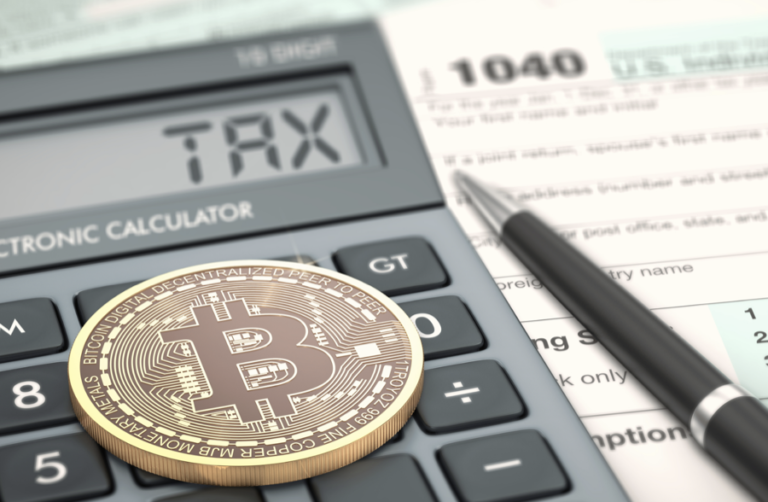
Germany Crypto Tax: Guide for 2025

Last Updated on 4 October 2025
Germany’s crypto tax laws present a significant planning opportunity for long-term investors. To optimize your financial strategy with digital currencies, you must first understand the core principle: the German tax system fundamentally distinguishes between short-term trading and long-term investing.
As a CPA advising on complex tax issues, I’ve seen how critical this distinction is. This guide for 2025 is designed for investors and active traders who need to operate within the rules set by Germany’s Federal Central Tax Office (Bundeszentralamt für Steuern, or BZSt).
We will provide a clear methodology for managing your crypto assets to align with these regulations.
This lesson is structured to give you a complete picture of the Germany crypto tax framework. We will cover holding periods, applicable tax rates for different activities, specific rules for NFTs and staking, and finally, the procedural requirements for reporting.
Understanding Germany’s Crypto Tax Framework
In Germany, digital assets are classified as “private money” or Privatvermögen, a classification confirmed by the German Federal Court of Justice (Bundesfinanzhof) in a landmark 2023 decision. This means they are not treated like stocks, which are subject to a flat 25% capital gains tax. Instead, their tax treatment depends entirely on how long you hold them.
The Essentials of Crypto Taxation in Germany
The foundation of German crypto taxation rests on a few key rules established under Section 23 of the Income Tax Act (Einkommensteuergesetz, EStG).
The German Federal Ministry of Finance (BMF) provided significant clarification on these rules in a directive issued in May 2022, which was further updated in March 2025 to address newer market developments like DeFi.
- Tax Exemption for Long-Term Holdings: If you hold a crypto asset for more than one year, any profit from its sale is completely tax-free.
- Income Tax on Short-Term Gains: If you sell an asset within one year of acquiring it, the profit is considered “other income” and is taxed at your personal income tax rate, which can be up to 45%.
- The €1,000 Exemption Limit: For the 2024 tax year and onwards, if your total net profit from all private short-term sales (including crypto) is less than €1,000, the entire amount is tax-free. However, if your profit is €1,000 or more, the full amount becomes taxable.
- The €256 Income Threshold: Income from activities like staking or mining is tax-free if your total “other income” for the year is below €256. If it exceeds this amount, the entire sum is subject to income tax.
Long-Term vs. Short-Term Holdings: A Critical Distinction
The one-year holding period is the single most important rule in Germany’s crypto tax code. A “disposal” that triggers a taxable event includes selling for fiat currency, trading for another cryptocurrency, or using it to pay for goods and services.
Here’s a practical example:
- Short-term: You buy 1 ETH for €2,000 in January and sell it for €3,000 in November of the same year. The €1,000 profit is subject to your personal income tax rate.
- Long-term: You buy 1 ETH for €2,000 in January 2024 and sell it for €3,500 in February 2025. Because you held it for over a year, the €1,500 profit is completely tax-free.
Germany’s Crypto Tax Rates at a Glance
When crypto gains are taxable, they are added to your total annual income and taxed at a progressive rate. In addition to the standard income tax, two other surcharges may apply.
- Income Tax (Einkommensteuer): Rates range from 0% to 45%, depending on your income level.
- Solidarity Surcharge (Solidaritätszuschlag): A 5.5% surcharge applied to your income tax liability. However, this now only affects high earners. For 2025, the surcharge generally applies only if your annual income tax exceeds €19,950 for single filers.
- Church Tax (Kirchensteuer): If you are a registered member of an officially recognized church in Germany, you must pay a church tax of 8-9% of your income tax, depending on your federal state.
Special Cases: Staking, Lending, and NFTs
The general rules provide a solid foundation, but specific activities have unique tax treatments that every investor must know.
Staking and Lending Rewards
Rewards from staking and lending are considered taxable income at the moment you receive them. Their value is determined by the market price in EUR on the day they are credited to your wallet. A crucial rule change from April 2022, confirmed by the BMF, removed the previous ten-year holding period for staked or loaned assets. Now, these assets also qualify for the standard one-year tax-free holding period after being received.
Tax on NFTs
German tax authorities treat Non-Fungible Tokens (NFTs) the same as other crypto assets. Their taxability is determined by the holding period.
- For collectors: If you buy and sell an NFT, the one-year holding rule applies. Gains are tax-free after one year.
- For creators: If you mint and sell NFTs, the income is generally considered commercial or artistic activity. This income is subject to your personal income tax rate and potentially trade tax, without the benefit of the one-year holding exemption.
German Income Tax Brackets for 2025
For any short-term crypto gains, your profit is added to your total annual income. The tax-free allowance for 2025 has been raised to €12,096 for individuals and €24,192 for married couples filing jointly. Here are the official income tax brackets for 2025.
| Taxable Income (Single) | Taxable Income (Married, Jointly Filed) | Tax Rate |
|---|---|---|
| Up to €12,096 | Up to €24,192 | 0% |
| €12,097 – €68,429 | €24,193 – €136,858 | 14% to 42% (Progressive) |
| €68,430 – €277,825 | €136,859 – €555,650 | 42% |
| Over €277,825 | Over €555,650 | 45% |
Businesses and Crypto Taxes: A Different Ball Game
For corporate entities, the favorable one-year holding period does not apply. All crypto profits are treated as business income and are subject to both corporate and trade taxes.
- Corporate Tax (Körperschaftsteuer): A flat rate of 15%, plus the 5.5% solidarity surcharge on that amount.
- Trade Tax (Gewerbesteuer): This varies by municipality but typically adds another 14-17% on average.
Reporting Your Crypto Taxes: The How-To
The standard deadline for filing your annual tax return is July 31st of the following year. The BMF’s 2025 directive significantly tightened documentation requirements, making meticulous record-keeping mandatory. You must be able to prove the acquisition date and cost for every transaction.
You must report your crypto activities on specific forms:
- Anlage SO: Used to report gains from private sales of crypto held for less than one year.
- Anlage KAP: Used for reporting income from crypto derivatives like futures, which are taxed as capital investments.
To simplify this process, many German investors use specialized crypto tax software. Platforms like Blockpit, Koinly, and CoinLedger integrate with exchanges and wallets to automatically track transactions and generate compliant reports. The BMF accepts reports from these tools provided the data is complete and plausible.
FAQs
What is the primary way to legally avoid crypto tax in Germany?
The most effective strategy is to hold your crypto assets for more than one year before selling, swapping, or spending them. This makes any gains entirely tax-free for private investors.
When are crypto taxes due in Germany?
The deadline for your annual tax return is July 31st of the following year. If you use a certified tax advisor (Steuerberater), this deadline is typically extended to the end of February of the second following year.
What is the difference between income tax and tax-free gains?
Profits from crypto sold within one year of purchase are treated as income and taxed at your personal income tax rate. Profits from crypto sold after holding for more than one year are completely tax-free.
Which accounting method is used for crypto in Germany?
Germany’s tax office prefers the First-In, First-Out (FIFO) method for calculating crypto gains. This means you are assumed to be selling the coins you acquired first.
What if I have crypto losses?
Short-term losses from crypto transactions can be offset against short-term gains from other private sales within the same year to reduce your tax liability. If you have no gains, these losses can be carried forward to future years, but only if you declare them in your tax return.
Is cryptocurrency legal in Germany?
Yes, cryptocurrencies are legal and formally recognized as private money or “units of account” by German financial authorities, including the Federal Financial Supervisory Authority (BaFin).
Where can I find official cryptocurrency regulations in Germany?
The primary guidance comes from the Federal Central Tax Office (Bundeszentralamt für Steuern or BZSt) and the Federal Ministry of Finance (BMF). The BMF’s official letters, particularly the one updated in March 2025, contain the detailed rules.
Conclusion
Operating effectively within the Germany crypto tax system depends on understanding the fundamental difference between short-term and long-term holdings.
Whether you are a long-term investor benefiting from the one-year holding rule or an active trader managing short-term gains, compliance is non-negotiable.
Your immediate next step should be to categorize all of your crypto transactions from the past year. Use a crypto tax software tool to ensure your records are accurate and complete, which is now a strict requirement from the tax authorities. If your situation is complex, consulting a German tax advisor is a prudent investment.
Related guides:
- https://nomadoffshoreacademy.com/crypto-tax-united-states/
- https://nomadoffshoreacademy.com/crypto-tax-uk/
- https://nomadoffshoreacademy.com/canada-crypto-tax/
- https://nomadoffshoreacademy.com/spain-crypto-tax/
- https://nomadoffshoreacademy.com/malta-crypto-tax/
- https://nomadoffshoreacademy.com/swiss-crypto-tax/
- https://nomadoffshoreacademy.com/crypto-tax-japan/