Guide To The Cost Of Living In Italy For Digital Nomads And Expats

Last Updated on 4 October 2025
Understanding the cost of living in Italy is the foundational step for any digital nomad or expat planning a move. This guide provides a financial blueprint, breaking down the real numbers required to budget effectively for your life in Italy.
From my experience as a financial strategist advising clients on international relocations, a successful transition depends entirely on a clear financial plan.
We will analyze national averages, compare costs between major cities and smaller towns, and identify actionable strategies for managing your expenses. Our lesson is divided into three parts. First, we will establish baseline costs for housing and daily life. Second, we will detail transportation and miscellaneous expenses. Finally, we will outline methods for reducing your overall spending.
Key Takeaways
- The cost of living in Italy shows a significant variance, with northern cities like Milan being up to 50% more expensive than southern cities such as Palermo.
- A single person’s average monthly expenses, excluding rent, are estimated by Numbeo in 2025 to be around €850 in major cities and can be as low as €650 in smaller southern towns.
- Affordable housing is most accessible in southern regions like Sicily and Puglia, and you can find options on platforms like Immobiliare.it and Idealista.it.
- Groceries typically cost a single person €250-€350 per month, but shopping at discount stores like Lidl or local markets can lower this expense.
Understanding the Cost of Living in Italy

To accurately assess the cost of living in Italy, you must analyze key expense categories. These include housing, utilities, groceries, transportation, healthcare, and entertainment.
These costs diverge significantly based on your location and lifestyle choices.
Factors That Affect the Cost of Living
The primary driver of your expenses in Italy is location. A distinct economic divide exists between the industrial north and the more agrarian south. Major northern cities like Milan and Bologna have higher housing costs and daily expenses compared to southern cities like Naples or Bari.
Your lifestyle is the second major factor. Dining out frequently, joining private gyms, and extensive travel will increase your budget. For example, a gym membership can range from €40 per month at a budget chain like Palestre Italiane to over €100 for a premium club.
Finally, currency exchange rates directly impact your purchasing power if your income is not in Euros. A common mistake I’ve seen clients make is underestimating the effect of currency fluctuations on their monthly budget.
Average Monthly Expenses for a Single Person
You must have a clear budget before moving to Italy. According to 2025 data from ISTAT, the Italian National Institute of Statistics, the average household expenditure varies greatly by region.
For a single person, monthly costs without rent average around €850. This figure covers food, local transportation, and basic personal spending. In a major city like Milan, expect grocery bills of €300 to €350 per month.
In a smaller, more affordable town like Perugia in Umbria, your monthly expenses for food and utilities might be closer to €600. These figures demonstrate why choosing your location is a critical financial decision.
Differences Between Major Cities and Smaller Towns
The financial contrast between Italy’s major urban centers and its smaller towns is stark. Large cities offer more job opportunities and amenities but come at a premium. Rent, dining, and entertainment are significantly more expensive.
Smaller towns provide a slower pace of life and a much lower cost of living. While they may have fewer services, the savings can be substantial. For anyone considering moving to Italy, this choice is fundamental to your financial planning.
Here is a direct comparison based on recent data to illustrate the difference.
| Expense Category | Milan (Major City) | Palermo (Smaller City) |
|---|---|---|
| One-Bedroom Apartment (Center) | €1,200 – €2,200 / month | €450 – €700 / month |
| Basic Utilities (85m2 Apt) | €215 / month | €160 / month |
| Monthly Transport Pass | €39 (ATM) | €30 (AMAT) |
| Meal, Inexpensive Restaurant | €20 | €12 |
Accommodation Costs in Italy

Your largest monthly expense will be accommodation. The cost of rent and utilities varies dramatically across the country, so thorough research is necessary to find affordable options.
Average Cost of Rent and Utilities
In Milan, monthly rent for a one-bedroom apartment can easily exceed €1,500 in the city center. In contrast, you can find similar properties in a city like Lecce in Puglia for around €500.
Utilities, known as `utenze`, are a significant additional cost. These include electricity (`elettricità`), gas (`gas`), water (`acqua`), and waste tax (`TARI`). For an 85-square-meter apartment, budget approximately €150-€250 per month. Internet service from providers like TIM or Vodafone typically adds another €25-€30 per month.
A frequently overlooked expense is the `spese condominiali`, or building maintenance fees, which can add €50 to €150 per month to your housing costs.
Tips for Finding Affordable Housing
Finding budget-friendly housing is achievable with the right strategy. The southern provinces consistently offer the most economical options for expats.
- Use dedicated search portals. Websites like Immobiliare.it, Idealista.it, and Casa.it are the primary tools for finding rentals across Italy. Set up alerts for cities in budget-friendly regions like Abruzzo, Sicily, or Calabria.
- Engage local agencies. In smaller towns, many of the best deals are not listed online. Contacting a local `agenzia immobiliare` can give you access to unlisted properties.
- Negotiate long-term leases. Landlords are often willing to offer a lower monthly rate for a longer lease commitment, known as a `contratto 4+4` (a four-year lease with an option for four more).
- Obtain your `Codice Fiscale`. You cannot sign a formal rental contract without an Italian tax code (`Codice Fiscale`). Securing this from the `Agenzia delle Entrate` (Italian Revenue Agency) should be one of your first administrative tasks.
Food and Grocery Expenses
Your monthly food budget will depend on your shopping habits and how often you dine out. Italy offers both high-quality, affordable raw ingredients and a wide range of dining experiences.
Average Cost of Groceries
A single person should budget between €250 and €350 per month for groceries. This can be managed by shopping strategically.
Supermarket chains like Esselunga and Coop are known for quality but are more expensive. For significant savings, shop at discount chains such as Lidl, Eurospin, or MD. A 2024 survey by the consumer group Altroconsumo found that families could save over €1,000 annually by choosing discount supermarkets.
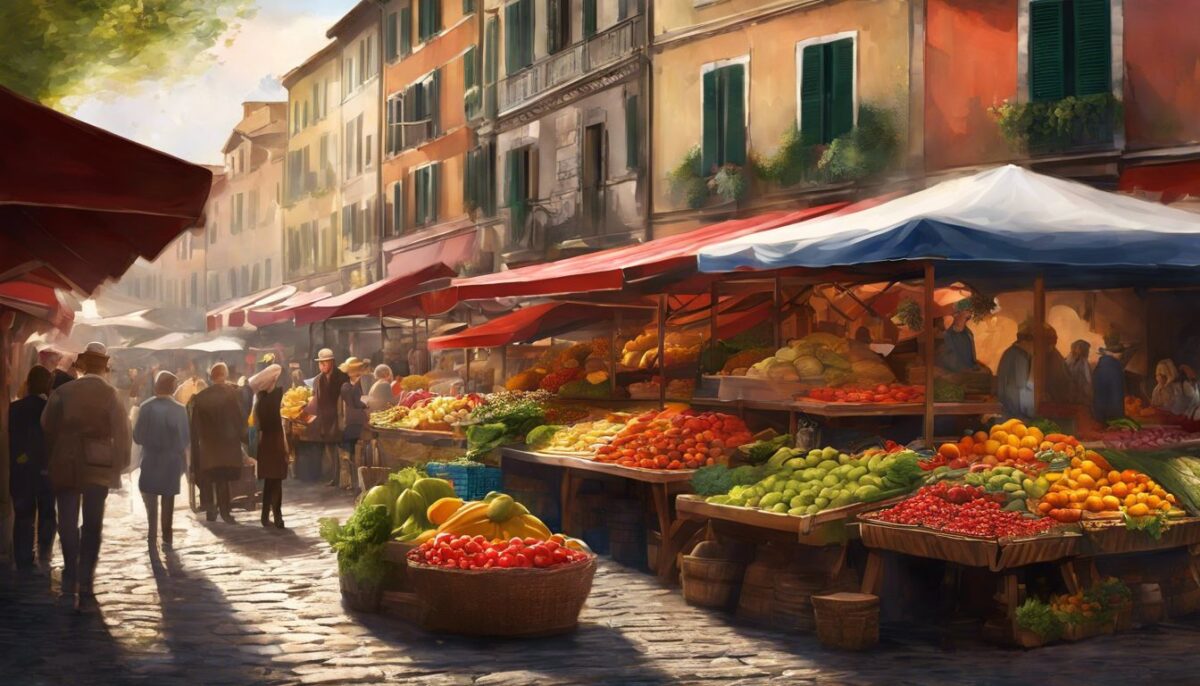
An insider tip for saving money and enjoying fresh produce is to shop at your local `mercato rionale` (neighborhood market). Prices for fruits, vegetables, and cheeses are often lower than in supermarkets, and the quality is typically higher.
Eating Out in Italy
Dining out in Italy can be surprisingly affordable if you know where to look. A meal at an inexpensive trattoria typically costs €15-€25 per person. Be aware of the `coperto` (cover charge), a fixed fee of €1-€3 per person that is common in most restaurants.
For a budget-friendly option, look for `aperitivo` or `apericena` deals. For the price of a drink (€8-€12), you get access to a buffet of food, which can often substitute for dinner.
Transportation Costs
Public transportation in Italy is generally efficient and more cost-effective than car ownership, especially in urban areas. High-speed trains connect major cities, while local buses and metros serve daily commuters.
Public Transportation Costs
A monthly public transport pass (`abbonamento mensile`) is the most economical option for commuters. The cost varies by city.
- In Rome, a monthly pass from ATAC costs €35.
- In Milan, the equivalent pass from ATM is €39.
For travel between cities, high-speed trains operated by Trenitalia and Italo are popular. Booking tickets in advance can result in significant savings. For instance, a high-speed train ticket from Rome to Florence can cost over €80 if bought on the day of travel but can be found for as little as €25 if booked a few weeks ahead.
Owning a Car in Italy
From a financial planning perspective, owning a car in Italy is a significant liability. In addition to the purchase price, you must budget for several recurring expenses.
Gasoline prices in Italy are among the highest in Europe, often exceeding €1.80 per liter. Other mandatory costs include the `bollo auto` (annual ownership tax) and `RC Auto` (mandatory third-party liability insurance), which can total over €1,000 per year.
A major pitfall for drivers is the `Zona a Traffico Limitato` (ZTL), or restricted traffic zone, in most historic city centers. Unauthorized entry results in automatic fines that can quickly accumulate.
Miscellaneous Expenses
Your budget must also account for healthcare, entertainment, and travel. These categories are highly personal but have baseline costs you should anticipate.
Health Care
Legal foreign residents can register with Italy’s National Health Service, the `Servizio Sanitario Nazionale` (SSN). This provides access to heavily subsidized medical care. For non-EU citizens who are not employed, voluntary registration typically costs a fixed annual fee of around €2,000, though it can be income-based.
The new Italy Digital Nomad Visa, introduced in 2024, requires applicants to have comprehensive private health insurance valid for the duration of their stay. Policies from providers like Cigna Global or Allianz Care are popular among expats and meet these requirements.
Entertainment
Entertainment costs in Italy are manageable. A movie ticket costs about €8-€10. Entrance to state museums is often free on the first Sunday of the month. A pint of domestic beer at a bar will cost between €4 and €6.
A popular and often affordable leisure activity is visiting an `agriturismo` (a working farm that offers meals or accommodation), where you can enjoy authentic, locally sourced food in a rustic setting.
Travel and Leisure Activities
Italy’s location makes it an excellent base for exploring Europe. Budget airlines like Ryanair and EasyJet offer low-cost flights from major Italian airports to destinations across the continent.
Domestically, you can explore iconic landmarks or relax on the Amalfi Coast. A high-speed train is often the most efficient way to travel between regions. For a more scenic and budget-friendly option, regional trains (`regionale`) connect smaller towns, though they are much slower.
Tips for Reducing Living Costs
To reduce your Italy living expenses, you should focus on strategic choices in housing, shopping, and transportation. Adopting local habits can also lead to significant savings.
Finding Budget-Friendly Options
The most effective way to lower your cost of living is to choose an affordable location. Rent and daily expenses in southern regions like Calabria or Molise are a fraction of what you would pay in Lombardy or Tuscany.
Embrace frugal habits like preparing meals at home, using public transportation, and seeking out free cultural events. Many cities host free festivals (`sagre`) throughout the year, celebrating local food and traditions.
Taking Advantage of Local Deals
To manage your budget, look for local deals and discounts. For dining, apps like TheFork offer significant discounts on restaurant bookings. For groceries, pay attention to weekly flyers (`volantini`) from supermarkets, which advertise special offers.
Many municipalities offer accommodation vouchers or tax incentives to attract new residents, particularly in depopulating rural areas. Researching these programs can yield substantial savings.
Considering Cheaper Cities and Regions in Italy
Living affordably in Italy often means looking beyond the famous tourist destinations. Cities like Perugia, Turin, and Palermo offer a high quality of life with much lower expenses than Rome or Milan.
Regions like Abruzzo and Le Marche on the Adriatic coast provide beautiful scenery and a budget-friendly lifestyle. Settling in these areas allows you to experience authentic Italian culture while keeping your monthly expenses low.
| City | Region | Cost of Living Index (Excl. Rent) |
|---|---|---|
| Milan | Lombardy | 70.1 |
| Rome | Lazio | 65.8 |
| Bologna | Emilia-Romagna | 63.5 |
| Palermo | Sicily | 52.3 |
Final Recommendations
You now have a structured overview of the cost of living in Italy for digital nomads and expats. The financial strategies provided here are designed to help you plan your budget with precision.
By applying this data-driven approach, you can create a financially sound and enjoyable life in Italy.
Your next step is to create a detailed personal budget based on your chosen city and lifestyle. This will be the most important tool for your financial success abroad.
Frequently Asked Questions
What are the average monthly expenses for a single person living in Italy?
Monthly expenses depend on location. Excluding rent, budget around €850 per month in a major city like Rome and closer to €650 in a smaller southern town. This covers groceries, local transport, and personal items.
How does the cost of living differ between major cities and smaller towns in Italy?
The cost of living is significantly higher in major northern cities like Milan due to expensive housing and lifestyle costs. Smaller towns, especially in the south, offer much more affordable living with lower rent and daily expenses.
What are the average costs for rent and utilities in Italy?
Rent varies widely. A one-bedroom apartment in Milan’s center can be €1,500+, while a similar one in Palermo might be €500. Utilities (electricity, gas, water, waste) average €150-€250 per month for an 85m2 apartment.
Can you provide some tips for finding affordable housing in Italy?
To find affordable housing, use websites like Immobiliare.it and Idealista.it. Focus your search on southern regions, consider smaller towns, and engage local real estate agencies. Negotiating a long-term lease can also secure a better rate.
How much should I budget for groceries and dining out in Italy?
For groceries, a single person should budget €250-€350 per month. You can save money by shopping at discount supermarkets like Lidl or at local markets. A meal at an inexpensive restaurant typically costs €15-€25 per person.
What are the transportation costs in Italy for digital nomads and expats?
Public transport is affordable. A monthly pass in Rome or Milan costs €35-€39. Owning a car is expensive due to high fuel prices, taxes (`bollo auto`), and mandatory insurance.
What should I know about healthcare expenses in Italy?
Legal residents can join the National Health Service (SSN) for a fee, providing subsidized care. However, the Italy Digital Nomad Visa requires comprehensive private health insurance from a provider like Cigna or Allianz.
How can I reduce my living costs in Italy?
To reduce costs, choose a cheaper city or region, shop at local markets and discount stores, use public transportation, and look for free entertainment. Adopting local, less expensive habits is key.